
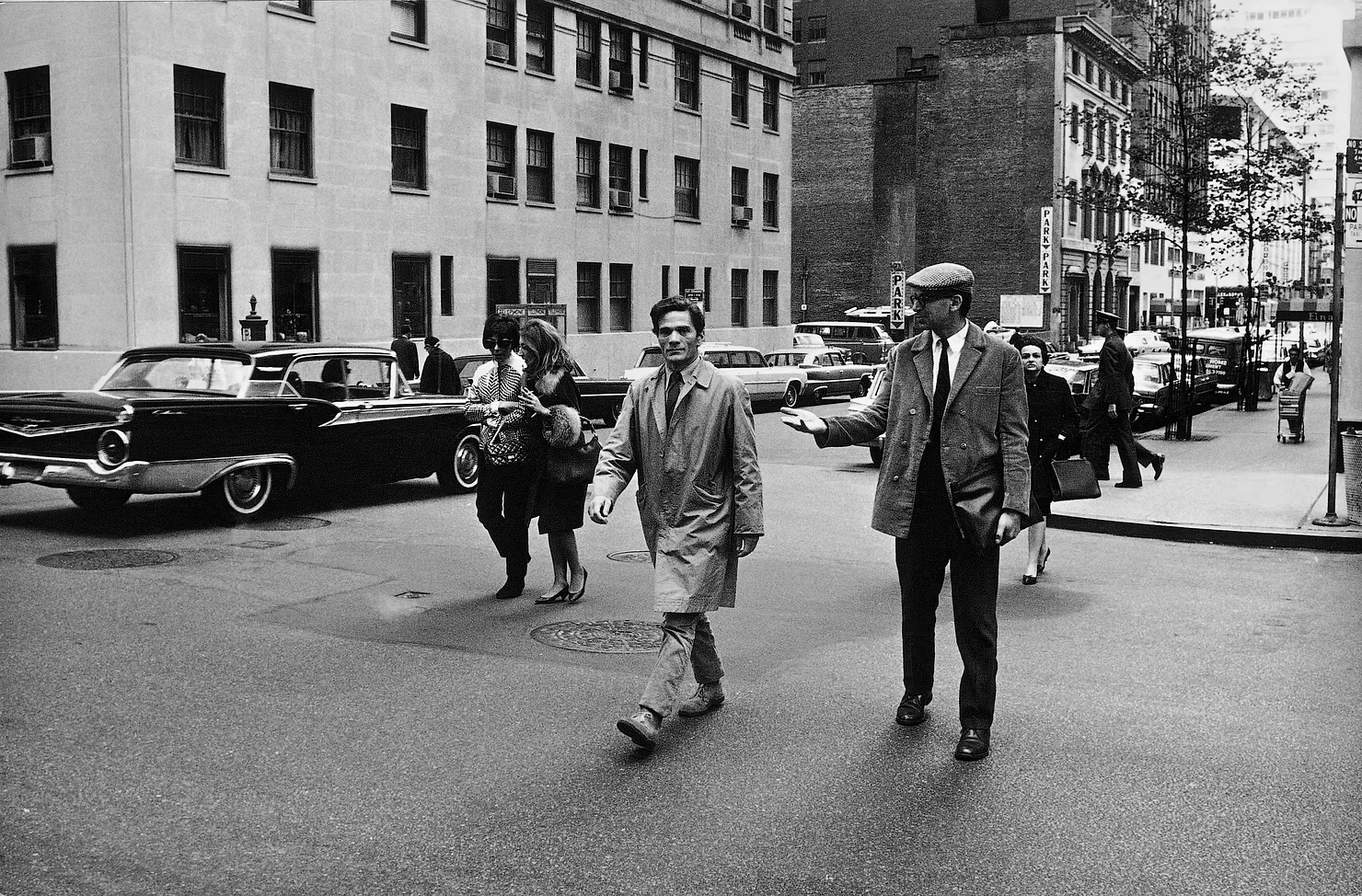
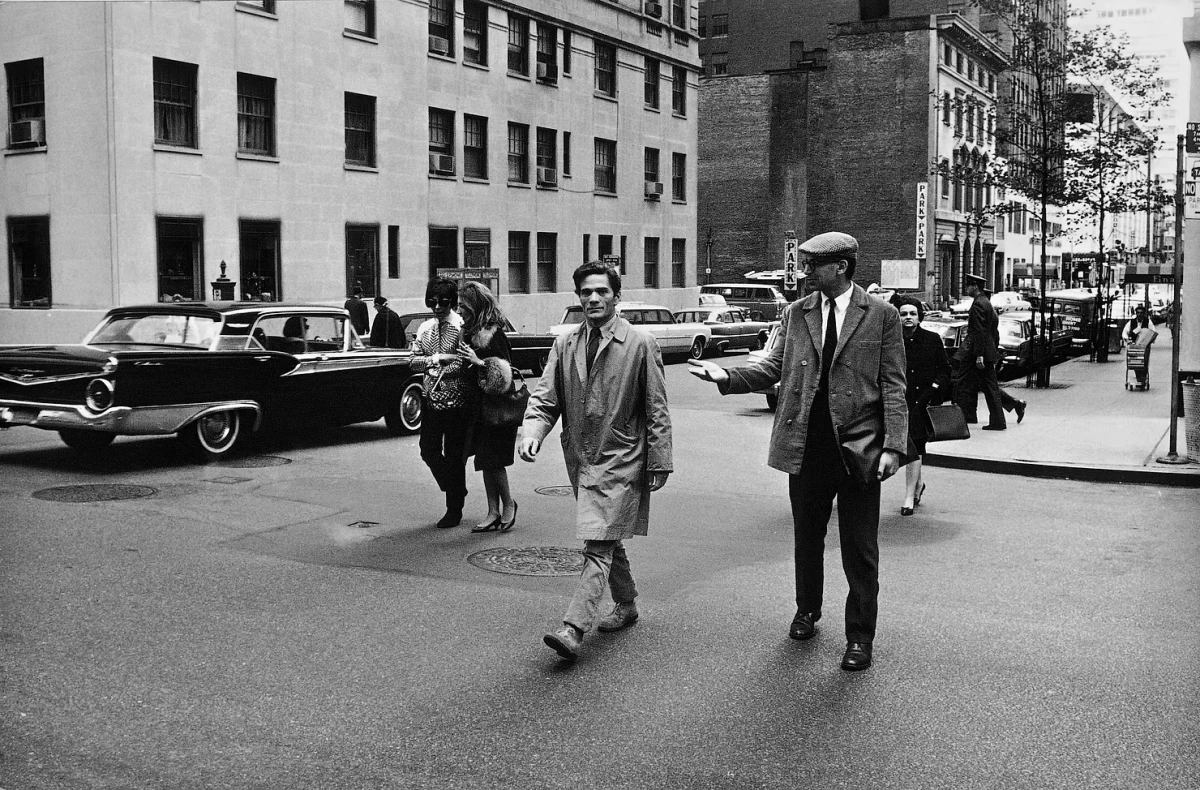
Americans Always Need to Idealize. Retracing Pier Paolo Pasolini’s 1966 Trip to New York

What did Pier Paolo Pasolini see in America? In 1966, Pasolini arrived in New York expecting to encounter the heart of American capitalism. Instead, he found a country that fascinated him: young, contradictory and shaken by the Civil Rights Movement, opposition to the Vietnam War and the emergence of the New Left. For Pasolini, the United States was a society without the class consciousness of European Marxism, yet seemingly charged with a revolutionary energy that Europe itself was losing. At the centre of this contradiction was race: from the Black freedom struggle to the poverty of the Bronx, Pasolini began to read New York through colonialism, Fanon and the struggles of the Global South. In a new article for oltreoceano, Mattia Marzà retraces Pasolini’s 1966 journey through New York to explore his fascination with America and the contradictions of a thinker whose political legacy is still contested today.
A twisted legacy
In the fictional Sicilian town of Regalpetra, it is election day, and pool supervisors are repeatedly presented with an eerie scene: every few minutes, some cars – always the same ones, with the stickers of the Christian Democracy and Italian Social Movement (neo-fascists) parties on their radiators – disgorge several old people, often confused and absent-minded, who are later escorted by some activists to the pool. Communist activists try to stop this fraud, which they ironically define corpse-carting, but they usually don’t succeed. However, sometimes these attempts at deception fail; and a neo-fascist activist discovers malgré lui that the elder woman he escorted is actually about to vote for the C.D. rivals, as instructed by the nuns, who managed to kill two birds with one stone: they earned a precious vote, and they dumped the transport costs to the neo-fascists[1].
This unforgettable scene is depicted by Leonardo Sciascia in his 1956 debut book, Le Parrocchie di Regalpetra, where the author provides detailed descriptions of specific Sicilian settings, including primary schools, sulphur springs, bourgeois social clubs and elections. Halfway between a memoir and a political essay, the book had extraordinary success and persistence; and many sketches excerpted from it were later quoted by other Sicilian authors, including Giuseppe Tornatore in his 2009 movie Baarìa[2]. The film, which recounts the story of the Torrenuova family of Bagheria (Palermo) from the 1930s to the 1980s, stages precisely this episode, but, despite the stylistic continuity, its meaning is reversed: in fact, it is the protagonist’s roguish brother, a Communist congressman, who leads several confused and disabled old people to the polls, before being scammed in turn by an elder supporter of C.D. who describes herself as «blind, but not dumb».
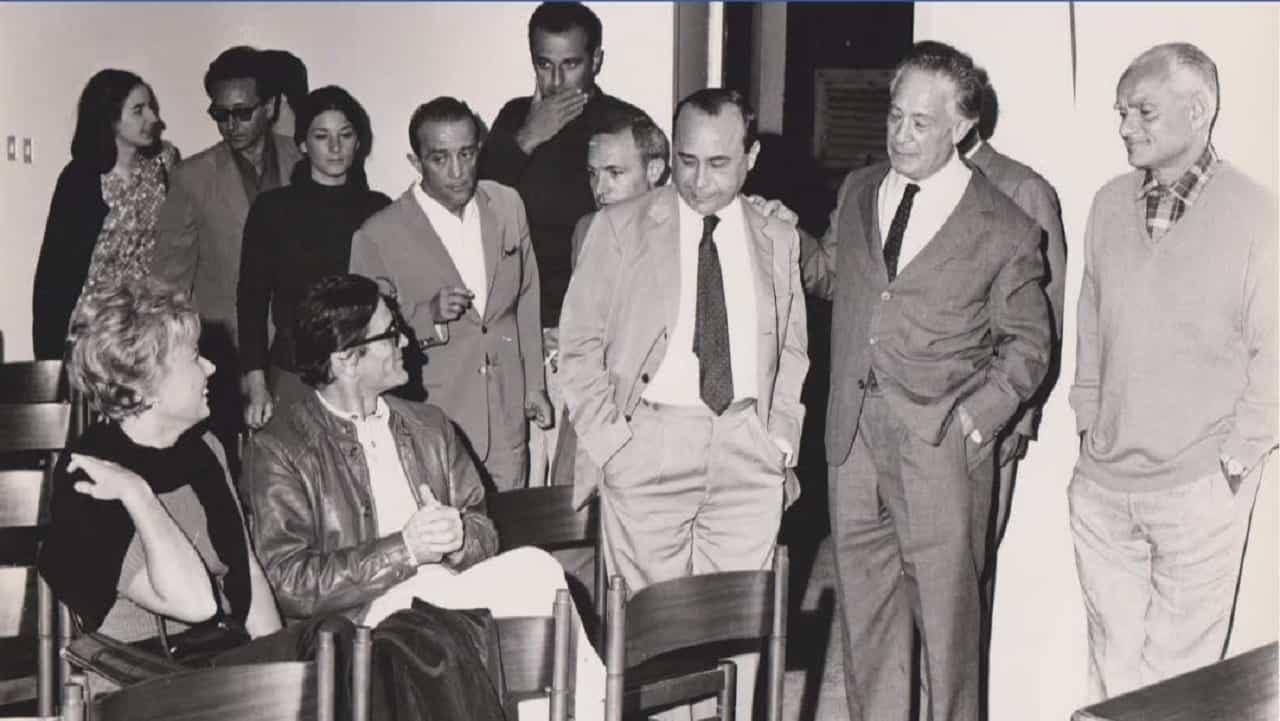
This form of distortion, which downplays the social and political significance of communist movements by negatively twisting their characteristics or radically altering their actions and attributing them to other factions instead, is typical of Italian political discourse following the collapse of communist regimes and parties. Pier Paolo Pasolini is perhaps the figure most at the centre of these dynamics. Current mainstream analysis of Pasolini is often a twisted legacy of his words and thoughts, and confronting it would mean dealing with a long thread of “despite”. Despite being a Marxist - even a non-aligned and independent one, as he defined himself - he is often remembered as a figure somehow beyond the right-left divide; despite being a fierce critic of police brutality and the role of law enforcement in defending class interests, his poem The PCI to the Young!! is always quoted as a blind support of “proletarian” officers against “bourgeois” students and protesters[3]; despite personally beating up a fascist who was contesting the premiere of his 1962 movie Mamma Roma, he is one of the leftist figures, alongside Antonio Gramsci or Hugo Pratt, that many neo-fascists have…