
Unfitting Gloves: around the O.J. Simpson Case

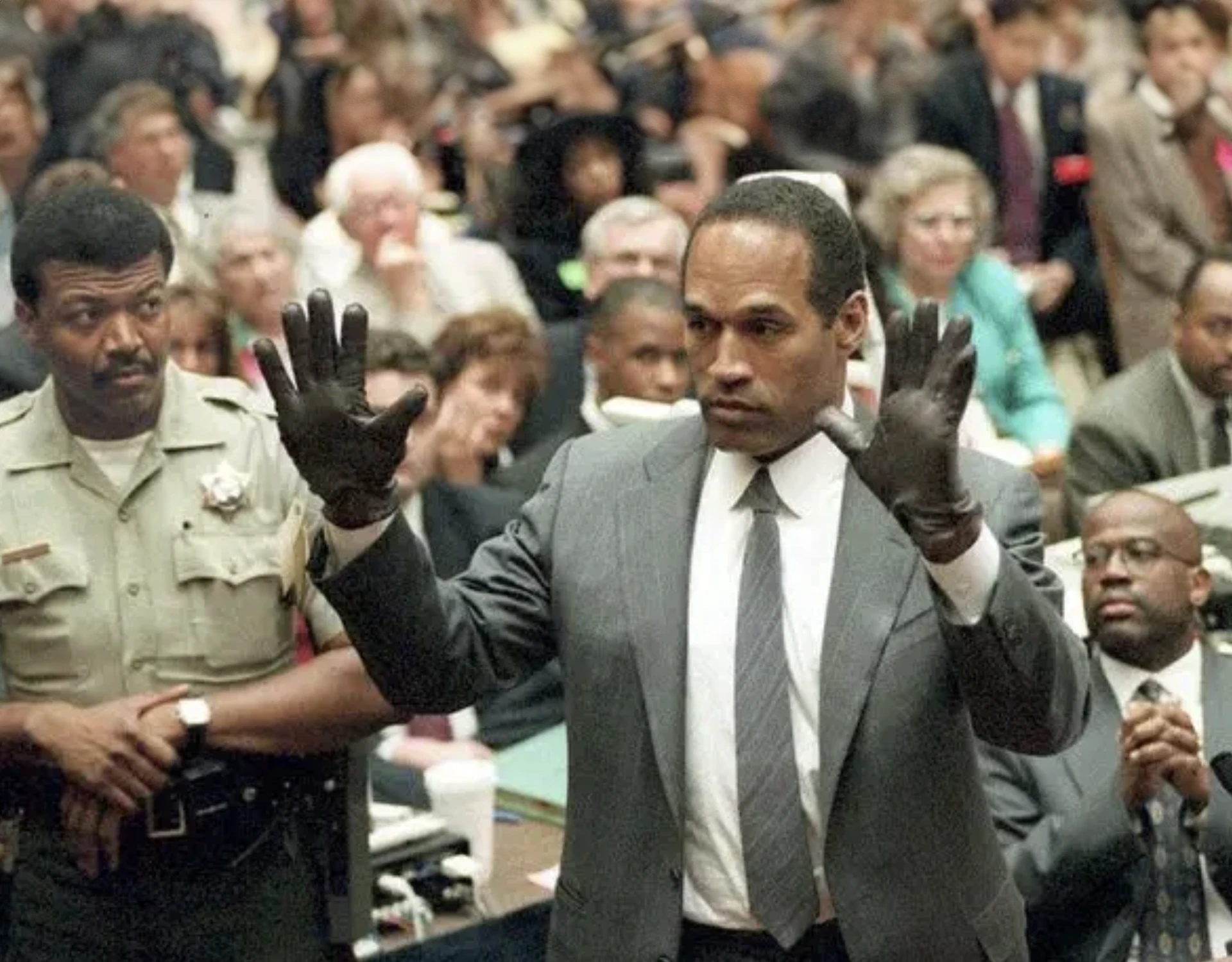
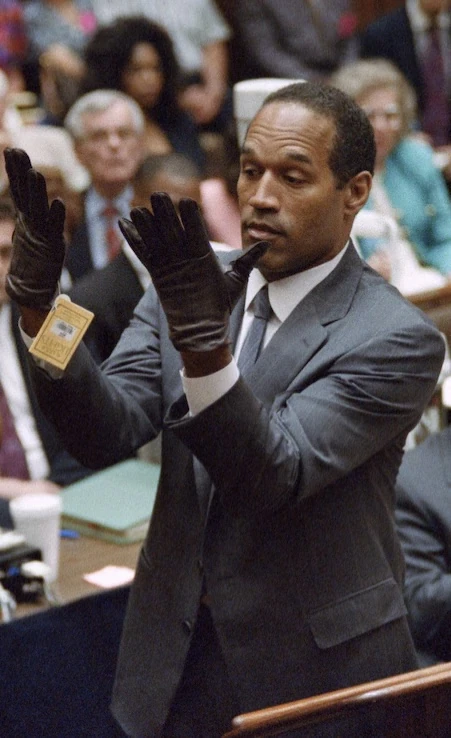
Almost like the assassination of Kennedy or the 9/11, the OJ Simpson trial was a proper Event, the kind that marks a historical and narrative discontinuity. Through this case, some of the deepest contradictions stirring the United States were revealed. Exactly 30 years since the murder of Nicole Brown Simpson and Ronald Goldman, oltreoceano presents “Unfitting Gloves: Around the O.J. Simpson Case”, a long-form journalism research which investigates the OJ case as a social and cultural phenomenon.
1. Warm-up: the greatest show ever
Yuri Orlov, one of the world's leading arms traders, flies to Liberia, inflamed by a horrific civil war, to secure a monopoly on the supply of weapons to the government forces of the bloodthirsty dictator Andre Baptiste. He will spend the night in what is formally a two-star hotel, in reality a hovel in one of the world’s poorest slums, in stark contrast to both the sumptuous presidential palace where he has just signed a contract and his luxurious New York residence. In the lobby, with the hum of fans in the background, two men are sitting on stools watching a rickety television set and commenting on what they see: a clip of OJ Simpson's deposition at his trial. This scene, from the 2005 blockbuster Lord of War, well demonstrates how the echoes of OJ's trial continue to reverberate thunderously in space - from a Los Angeles courthouse to the back alleys of West Africa - and in time - as the director deems it unnecessary to specify anything beyond the images glimpsed for a moment on the screen in the screen, despite the film's didactic and explicit tone and the fact that more than a decade has passed since the court case.
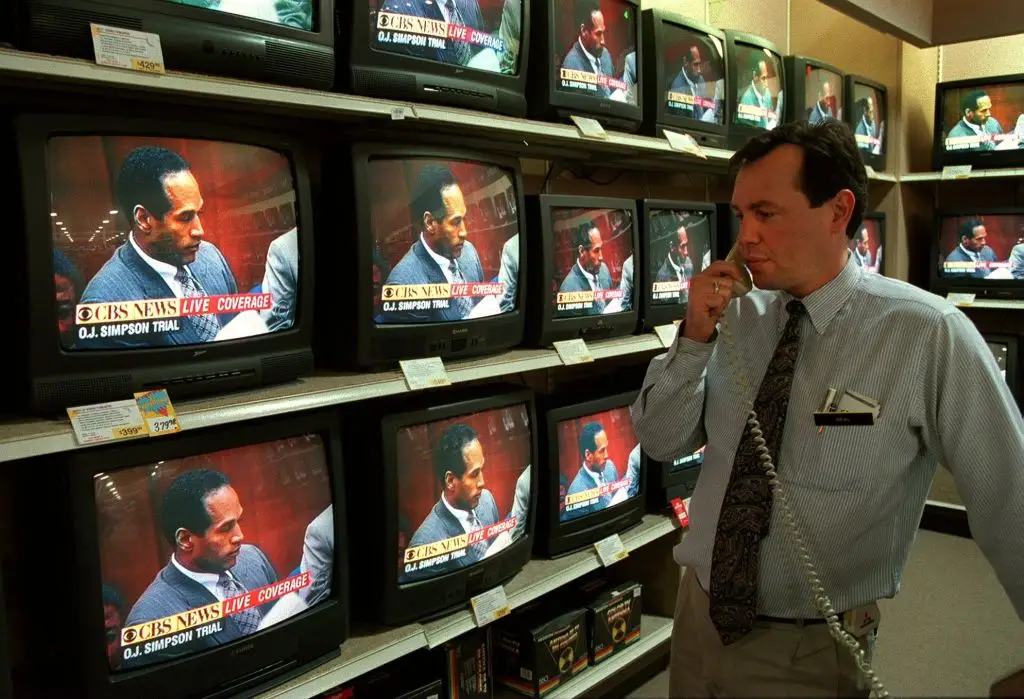
In fact, almost like the assassination of Kennedy or the 9/11, the trial that saw OJ Simpson charged with the murders of Nicole Brown and Ronald Goldman was a proper Event, the kind that marks a historical and narrative discontinuity: even if only in broad strokes, everyone knows what was about, what the premises were, how it ended. Above all, it was an Event in the most media-oriented sense of the term, a television show of mammoth scope and duration.
Suffice it to say that, between June 17th 1994 and May 23th 1995, the segments dedicated to the case on the ABC news programmes far exceeded, both in absolute and percentage terms, any other news story, including the 1994 presidential election and the Oklahoma City bombing, to the date the second bloodiest act of terrorism in US history. The live transmission of the acquittal verdict registered an audience of more than 150 millions viewers, more than half the population of the United States. This isn’t just a quantitative question: mediatisation also produced radical qualitative transformations in the way racism, gender violence and criminal trials were discussed in the mainstream, ratified new narrative and commercial paradigms, even spawned entrepreneurial and lifestyle sagas, such as that of the Kardashians [1].
Derek Alderman has gone so far as to speak of the “Simpsonization of domestic news” [2]; i.e., a mechanism whereby, in the course of the trial, the latter became the lens through which all national and international news was interpreted and represented the parameter of contextualisation and signification of events in the US debate in the…