
George Floyd, 3 years later (a conversation with Alessandro Portelli)
In 2020, the protests over the killing of George Floyd by a Minneapolis police officer ignited a mobilisation across the United States and beyond. Three years later, we thought we'd revisit the many issues brought to light by that movement. To do so, we interviewed Alessandro Portelli, a former professor of Anglo-American history at La Sapienza University in Rome. Alessandro Portelli is an internationally renowned researcher and scholar and one of the leading exponents of oral history. Author of numerous books on American history and culture, including: Il ginocchio sul collo. L'America, il razzismo, la violenza tra presente, storia e immaginari published by Donzelli Editore in 2020.
George Floyd, 3 years later (a conversation with Alessandro Portelli)
How did you approach the study of North American culture and in particular that of the African American community?
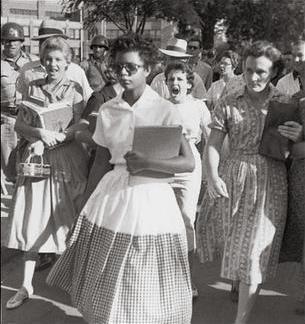
I consider myself a member of the 1950s generation, perhaps the first to begin to develop a generational identity distinct from that of adults. To be seventeen or eighteen in the 1950s didn’t mean any longer to be just an adult in preparation, but to have an identity related to your generation. This identity essentially revolved around music, which was mainly American music. Those were the years when rock n' roll arrived: Elvis Presley, Jerry Lee Lewis and later Little Richard, etc. At the same time, they were also the years when, in a rather sleepy political environment, I began to become aware of the existence of something very fascinating that is the Civil Rights Movement. We didn't know much about the bus boycott in Montgomery, but instead, for example, we did know about the whole affair of the attempted integration of the school in Little Rock, Arkansas with the intervention of federal troops, so to speak: the famous scene of the little girls walking through this gallows of racist men and women. That was a scene destined to leave a mark, because it gave the feeling that politics could somehow be something noble. Somehow, it is this dual relationship: the advent of rock music as a generational identity and the model of the Civil Rights Movement as a benchmark for a new morality, as well.
During that period, did you begin to have an interest in the approach of oral history and in music analysis as well?No, regarding oral history, it was at least another twenty years, or so, before I realised it. What happened at that time was that we talked about America, but it was difficult to go there; I had the opportunity to take a scholarship and I spent a year in Los Angeles, California, for my senior year of high school. That was the time when movements were emerging: on the one hand there were the first civil rights summers (Freedom Summer e.d.), on the other hand the student movement was beginning to rise. There was a special focus on the peace movement, Vietnam had not yet exploded but the US were already involved in Laos and so on. That's when my classmates introduced me to the relationship between folk revival music and movements, so I discovered my first Pete Seeger record, my first Johan Baez records, and Peter, Paul and Mary soon after, then Bob Dylan and so on. Let's say that the interest was mainly in popular music and its relationship with movements. The Civil Rights Movement, which had been so important to me, used music a lot and so I ended up doing my dissertation on Woody Guthrie. Meanwhile, a question…